

Daily Update - 24th Jan 2017
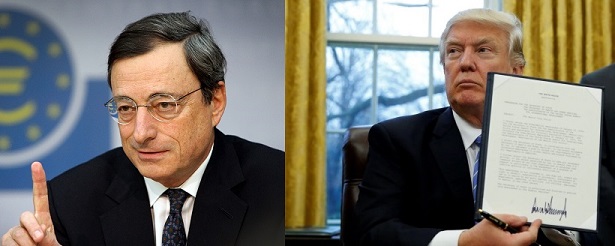
All Industry Activity Index from Japan came out positive and supported JPY to gain positive gain. This resulted JPY/AED pair to move up by 1.6%. In Brussels Draghi has threatened Italy with an almost certainly unpayable bill if the country's citizens take the democratic decision to quit the troubled Euro. Draghi said countries looking to axe the Euro will have to pay back all their debts in one go before they can leave, making such a move massively unaffordable. Writing a letter to two Italian MPs, he confirmed: “If a country were to leave the Euro system, its national central bank’s claims on or liabilities to the ECB would need to be settled in full." The pronouncement comes after prominent politicians in a number of member states including Italy, France, Greece and the Netherlands have all made noises about ditching the euro. Since the beginning of the year the U.S. dollar index is down close to 3%. Additionally ten year US Treasury yields have fallen sharply, dropping as much as 8bp at the start of Donald Trump's first week in office. Early morning today, President Trump reiterated his plans to "cut taxes massively" and bring manufacturing jobs back to America as he said that he will withdraw from TPP (Trans Pacific Partnership) and impose a 35% border tax on companies who want to have their production factories under TPP. His comments sent US Dollar index and Ten year US treasury yields down as much as 8 basis points. This also caused broad based Dollar sell off in Asian markets which favored rival currencies such as EUR and GBP, where EUR/AED pair moved up by 1% and GBP/AED pair by 1.5%. Next up will be market services and manufacturing data from Europe, where the reports will focus on business conditions in the manufacturing sector. This will be followed by Public sector net borrowing data from UK. This captures an amount of new debt held by the U.K. governments (the financial deficit in the UK national accounts). The day will end with Markit Manufacturing PMI from USA which captures the business condition in USA. Twelve countries that border the Pacific Ocean including Japan, Malaysia, Vietnam, Singapore, Brunei, Australia, New Zealand, Canada, Mexico, Chile and Peru signed up to the TPP in February 2016, representing roughly 40% of the world's economic output. This was aimed to deepen economic ties between these nations, slashing tariffs and fostering trade to boost growth. Members had also hoped to foster a closer relationship on economic policies and regulation. The agreement was designed so that it could eventually create a new single market, something like that of the EU. But all 12 nations needed to ratify it, before it could come into effect. Once Donald Trump won last year's election, the writing was on the wall for the TPP. US participation was the major move for the deal. It may be possible for the other countries to forge a smaller scale pact in its place, but it can't go ahead in its current form without USA. Former President Barack Obama treated trade deals as a priority during his tenure, and this particular deal would have bolstered America's position in the Asia-Pacific region, where China is growing in influence. But US opponents have characterized the TPP as a secretive deal that favored big business and other countries at the expense of American jobs and national sovereignty. On the campaign trail Donald Trump called TPP a "horrible deal".Yesterday Market
Yesterday Focus
Today’s Market
Today’s Focus
What is Trans Pacific Partnership?

